1. It works for me — that still does not mean “done”
The phone wakes him up before the laptop does. At the top of the chat with Tom2036 is a fresh image, and this time there is almost no fog.
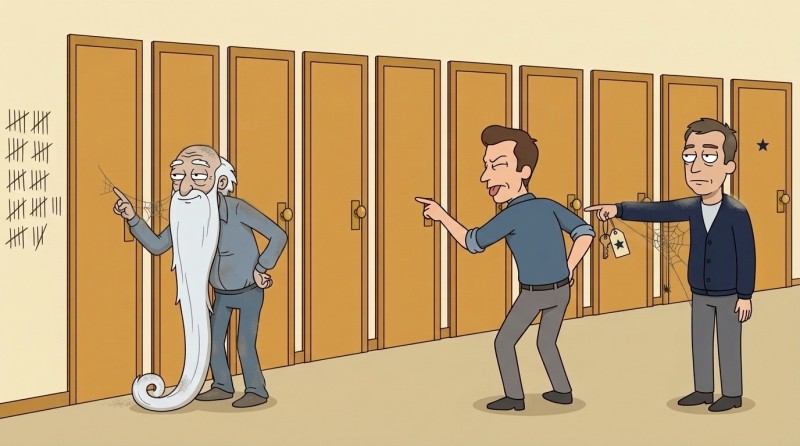
“More riddles again.” Tommy swipes with his finger, and the picture slides up.
He wakes up the laptop. On the screen is a landing page he started last week and left halfway done. He clicks the header. Blue. He repaints it green, squints. He brings back the blue. He moves the button left, then right, then back to where it was.
“What are you even supposed to be, anyway?” he asks the screen.
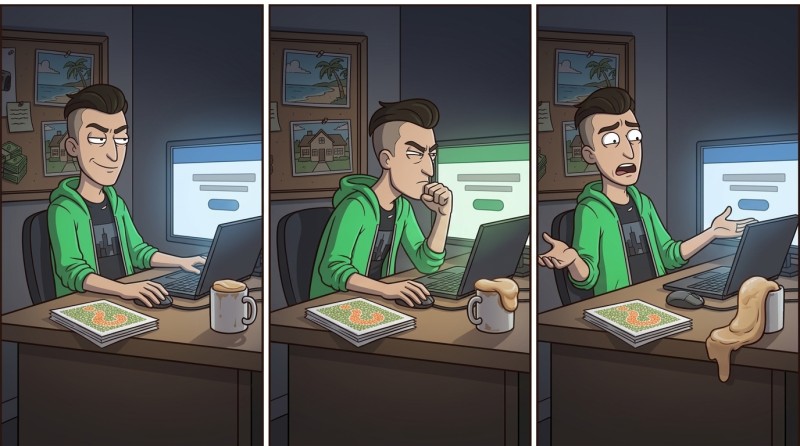
The screen stays silent. And that is the whole snag: what it was supposed to be, Tommy answered himself, out of his own head, to his own taste, which he did not even trust. He tweaked it — moved it away — brought it back. Round and round.
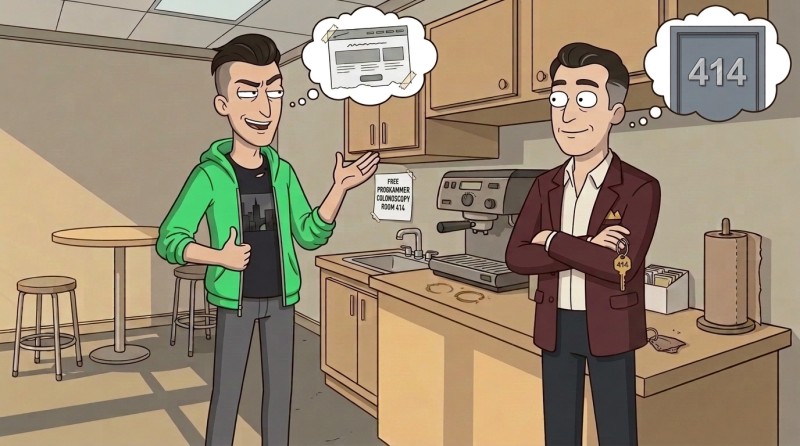
At the office, Tony does not greet him with the question he was expecting. Not “so where is the landing page?” but something else:
“Figured out your AI? Ready to make a landing page at last?”
“Tony, I have only been sharpening the tool for this all these days.” Tommy spreads that very confident smile that got him hired. “Never been more ready. The landing page will be stunning.”
He has an unfinished draft and not a single published link to his name, but in his voice there are ten delivered projects. And — funny enough — he trips over his own line. “Spent a week sharpening the tool.” Well, that means he was not just messing around with games — he was learning AI stuff for work. He meant it as a throwaway line, but he nailed it.
“Ready as ever,” he repeats more quietly, as if testing the words. One thing is Snake for yourself. Another is shipping a page to a real client.
Tony does not drag it out. He drops a screenshot into the chat — the client’s reference, the site they liked: clean, light, large headings, neat cards.
“Use it as a sample. And do not just publish it — publish it on the internet. Send me the link so I can open it from my phone and forward it to the client. Today.”
The reference image lands in the chat exactly on top of the morning one with the key. “Do not guess — ask the one who knows.” So that is what Tom2036 was about. Do not guess the client’s taste — now you have their sample in your hands. Ask, and you get it. Tommy does not have time to finish the connection, because he gets hooked on the second word.
“Publish it on the internet,” he repeats. “Of course… no problem.”
And only after saying it out loud does he understand that he has absolutely no idea what that actually involves.
2. There is a landing page, but it has no way out
Tommy goes back to his desk and opens the landing page. The page is rough — nowhere near the clean look from the reference. That is only half the problem; he can fix that. But the other half is much worse, and until this morning he simply had not noticed it.
“Sam,” he writes, “how do I send this landing page to Tony so he can open it on his phone?”
“You cannot,” Sam replies. “It opens in your browser, looks like a site, behaves like a site — but it lives in exactly one place on the planet: on your laptop. I built it for you here, on your machine. For Tony, it might as well not exist. For the client — not either. For nobody except you at this desk.”
“What do you mean it does not exist? It is right there, open.”
“It is open for you. If you send the file, it will open only for the person you sent it to, and only if they also have that file. Give Tony your laptop? That would be ridiculous. For a stranger to see it from their phone, you need one more thing you have not done even once yet.”
Tommy rereads it once, rereads it twice — and leans back in his chair.
“Hold on,” he writes. “So everything I have hacked together these past few days has literally been seen by no one but me?”
“No one,” Sam confirms. “You are both the author and the only viewer.”
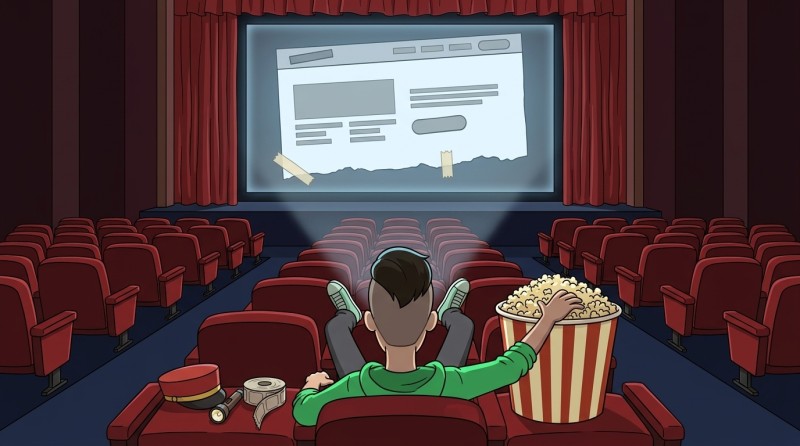
Tommy closes the lid halfway and immediately lifts it back up. All week he had considered everything done: the landing page opens — done, games launch — done. And between “it opens on my machine” and “people can see it,” it turns out, there is a whole step sticking out, one he never once took because he had no idea it existed. He had been building little houses in an aquarium — and now he has to take the first one out onto the street, to passersby. And today he has to take it out, not build it.
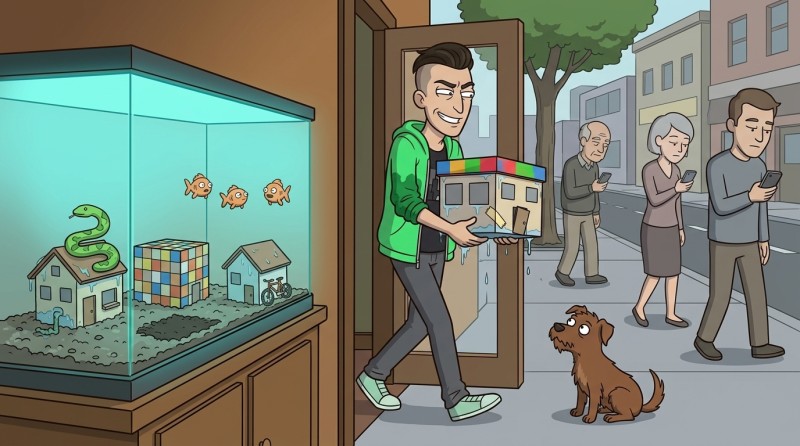
Back then, his tasks ended where everything started working on the screen — after that, the fun began. But here, right at that point, a second, unfamiliar half is sticking out. And this is not a game — this is a delivery due today.
3. First a working delivery, then the pretty bonuses
Oliver walks by — with a mug, relaxed — and drops exactly what was needed:

“Oh, vibe coder. Spent the whole week on games, ‘figuring out AI.’ Well, let’s see how that helps you in a real delivery now. The landing page is what the client needs, not Snake.”
“Come by this evening, Uncle Oliver,” Tommy calls without turning around and salutes him with a glass of cold coffee. “I’ll show you the link myself. Open it on your phone — and you will be in tears.”
He says it easily, on pure confidence — although Tommy still has no idea how he is going to get that link. Oliver snorts and leaves. And the jab does not throw Tommy off; it fires him up instead: he raised the stakes himself in front of a witness, so now there is nowhere to back out. For the first time, all the vibe he has built up over the week has to be turned into a live link that a stranger can open on a phone and say, “Wow, that is amazing.”
And what he really wants to do is the opposite. He wants to make the landing page beautiful right away, like in other people’s screenshots, polish the games, try everything new at once. Tommy raises his hand over the game tab — and puts it away.
“No, first the job,” he says under his breath. “I will ship the working thing first, then the games.”
Before, he was proving something to himself and the office with the help of AI, and that was safe: if it did not work, so what — it was just a toy. But today there is an outside person, a serious client he has not even seen, and that person does not care how many wonders Tommy conjured up over the week. He needs a site that opens and is solid. That carries a different weight than “oh, that turned out cool.”
Tommy closes the games, leaves the landing page on the screen next to the reference — and goes to Alex. But the mood is positive — not “save me, I do not understand anything,” but “here are three things, help me sort them out.”
GO TO FULL VERSION